
Rope is one of the most versatile and dependable products you can buy, yet for many customers, the terminology surrounding it can feel like a language of its own. Whether you are sourcing rope for marine use, garden projects, lifting operations or decorative applications, the jargon can quickly become confusing. From terms such as lay and splice to abbreviations like HMPE and SWL, knowing what they mean can make a world of difference to your rope choice, performance and safety.
The truth is that rope comes in countless materials, constructions and finishes, each with its own technical language. Manufacturers and suppliers use these terms to describe critical characteristics such as strength, flexibility, stretch, and durability. When you understand them, you can make confident, well-informed decisions that suit your intended use perfectly. But when you don’t, it’s easy to order rope that looks right but performs poorly in practice.
Buying rope without understanding the terminology can result in wasted money or, worse, safety issues if the rope is unsuited to the job. For example, using a high-stretch rope where a static line is needed can create dangerous movement under load. Conversely, choosing the wrong fibre can mean premature wear, rot or poor weather resistance. Knowledge is your best tool when purchasing rope...
This Rope Warehouse guide will help you cut through the confusion. Below you will find clear explanations for the most common rope terms, written in straightforward language for the everyday buyer and professional reference purposes alike. By the end, you will not only understand what each term means but also how it applies to real-world rope use.
1. Fibre – The basic building block of all rope. Fibres are the individual strands of material twisted or braided together to form yarns. They can be natural (such as cotton, sisal or manila) or synthetic (like polypropylene, polyester or nylon). Fibre choice determines many of the rope’s key properties.
2. Yarn – A collection of fibres twisted together to form a thicker strand. Several yarns are combined to create rope strands. The type of yarn influences smoothness, strength and flexibility.
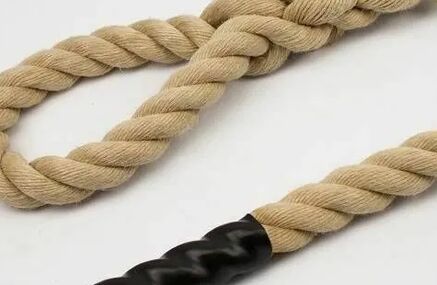
3. Strand – Groups of yarns twisted together make up a strand. Rope typically contains three or more strands twisted around a central core. Strand direction affects how the rope handles and resists rotation.
4. Lay – The direction and degree to which strands are twisted around the rope’s core. A right-hand lay rope twists clockwise, while left-hand lay twists anticlockwise. The lay impacts rope flexibility and torque.
5. Core – The central part of the rope that supports the outer strands. In braided or kernmantle constructions, the core provides strength, while the sheath or mantle offers protection.
6. Braid – A rope made by weaving or plaiting fibres together rather than twisting. Braided ropes are smoother, more flexible, and resist kinking more effectively than traditional laid ropes.
7. Three-Strand Rope – One of the most common rope constructions, featuring three strands twisted together. It’s simple, strong, and easy to splice, making it popular in marine and general-purpose use.
8. Double Braid – A rope with a braided core and a braided cover. The two layers share the load, offering excellent strength and handling. It’s common in sailing, lifting and arborist applications.
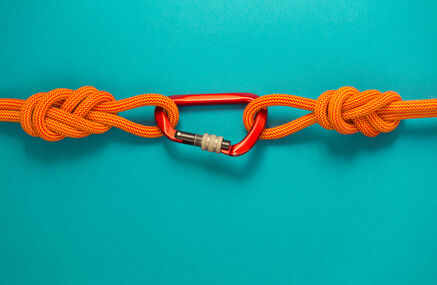
9. Kernmantle – A construction where a strong inner core (kern) is protected by an outer woven sheath (mantle). This design is favoured in climbing and rescue ropes for its high strength and abrasion resistance.
10. Diameter – The thickness of the rope, usually measured in millimetres. Diameter affects strength, weight, and compatibility with fittings or pulleys. Always check the diameter carefully before purchasing.
11. Breaking Load (or Breaking Strain) – The maximum force a rope can withstand before it fails. This is measured under controlled laboratory conditions and helps determine its suitability for heavy loads.
12. Safe Working Load (SWL) – The maximum load that can be safely applied to a rope in normal use. It’s typically a fraction of the breaking load, allowing for safety margins against wear and shock loads.
13. Stretch (or Elongation) – The amount a rope lengthens under tension. High-stretch ropes, like nylon, absorb shock loads well, while low-stretch ropes, such as polyester, maintain stability under load.
14. UV Resistance – A rope’s ability to resist degradation from sunlight exposure. UV-resistant ropes, such as polyester, last longer outdoors, whereas some synthetic ropes can weaken if left in direct sunlight.
15. Abrasion Resistance – How well a rope resists wear when rubbed against rough surfaces. Braided ropes generally perform better in this regard than twisted ones, making them ideal for repeated handling.
16. Splice – A method of joining or finishing rope by interweaving its strands rather than tying a knot. A properly executed splice maintains a high proportion of the rope’s original strength.
17. Whipping – A binding or wrapping around the end of a rope to prevent fraying. It’s often done with twine or tape and gives the rope a neat, durable finish.
18. Thimble – A small metal or plastic insert used inside an eye splice to protect the rope from wear where it attaches to fittings such as shackles or hooks.
19. Coiling – The process of neatly winding rope into loops for storage or transport. Proper coiling helps prevent kinks and tangles, extending the rope’s usable life.
20. HMPE (High-Modulus Polyethylene) – A modern synthetic fibre used in high-performance ropes. It is extremely strong, lightweight, and resistant to chemicals and UV damage, often used as a steel-wire replacement in lifting and marine applications.
21. Polypropylene – A common synthetic rope material that floats on water and is highly resistant to rot. It’s widely used for general-purpose, marine and leisure applications but has lower UV resistance than polyester.
22. Polyester – A durable, UV-stable synthetic fibre that resists stretching and abrasion. Ideal for outdoor and marine use where weather and sunlight exposure are factors.
23. Nylon – A strong, slightly elastic synthetic fibre with excellent shock absorption. Common in lifting, towing and mooring ropes, though it can absorb water and lose strength when wet.
24. Manila – A natural fibre rope made from the abacá plant. It is traditional, robust and biodegradable but less durable outdoors compared to synthetics.
25. Load Factor – A safety multiplier applied to account for conditions such as dynamic loads or environmental stress. Knowing the correct load factor ensures safe operation within a rope’s limits.
26. Torque – The rotational force that develops when a rope is loaded. Some ropes are designed to be non-rotating to prevent twisting under tension.
27. Creep – The gradual, permanent elongation of a rope when held under a constant load. It is most associated with synthetic fibres such as HMPE and should be considered in long-term applications.
28. Working End – The active part of a rope used to tie knots or attach fittings, as opposed to the standing part which remains static.
29. Standing Part – The section of the rope that remains still or bears the load when the rope is in use. Understanding the difference aids in correct knot-tying and load management.
30. Eye Splice – A loop formed at the end of a rope by splicing. It provides a strong, permanent connection point for hooks, shackles, or thimbles.
Although rope technology has advanced dramatically, many older nautical and trade terms still appear in books, workshops or heritage settings. These words hark back to the age of sail, when ropes were made from natural fibres and treated with tar, grease or canvas coverings for protection. While they add charm to maritime language, most are no longer used in modern rope manufacture or supply.
Cockscombing, serving and seizing were once essential techniques for protecting or decorating ropework, particularly on ships. Today, synthetic coatings, heat-sealing and machine splicing have replaced them. Similarly, marline and parceling described materials and methods used to wrap and waterproof rope long before synthetic fibres existed. They’re now of historical interest rather than practical use.
Other terms, such as whang rope, Flemish coil, and monkey’s fist, survive mostly in decorative or ceremonial contexts. The Flemish coil, for instance, is still laid out neatly on a deck for tradition’s sake, and the monkey’s fist knot remains popular in crafts and keyrings, though rarely needed for real maritime throwing lines.
While these expressions belong to the past, understanding them adds richness to your rope knowledge. They also remind us how far rope technology has come, and what residual terms and techniques remain in the present.